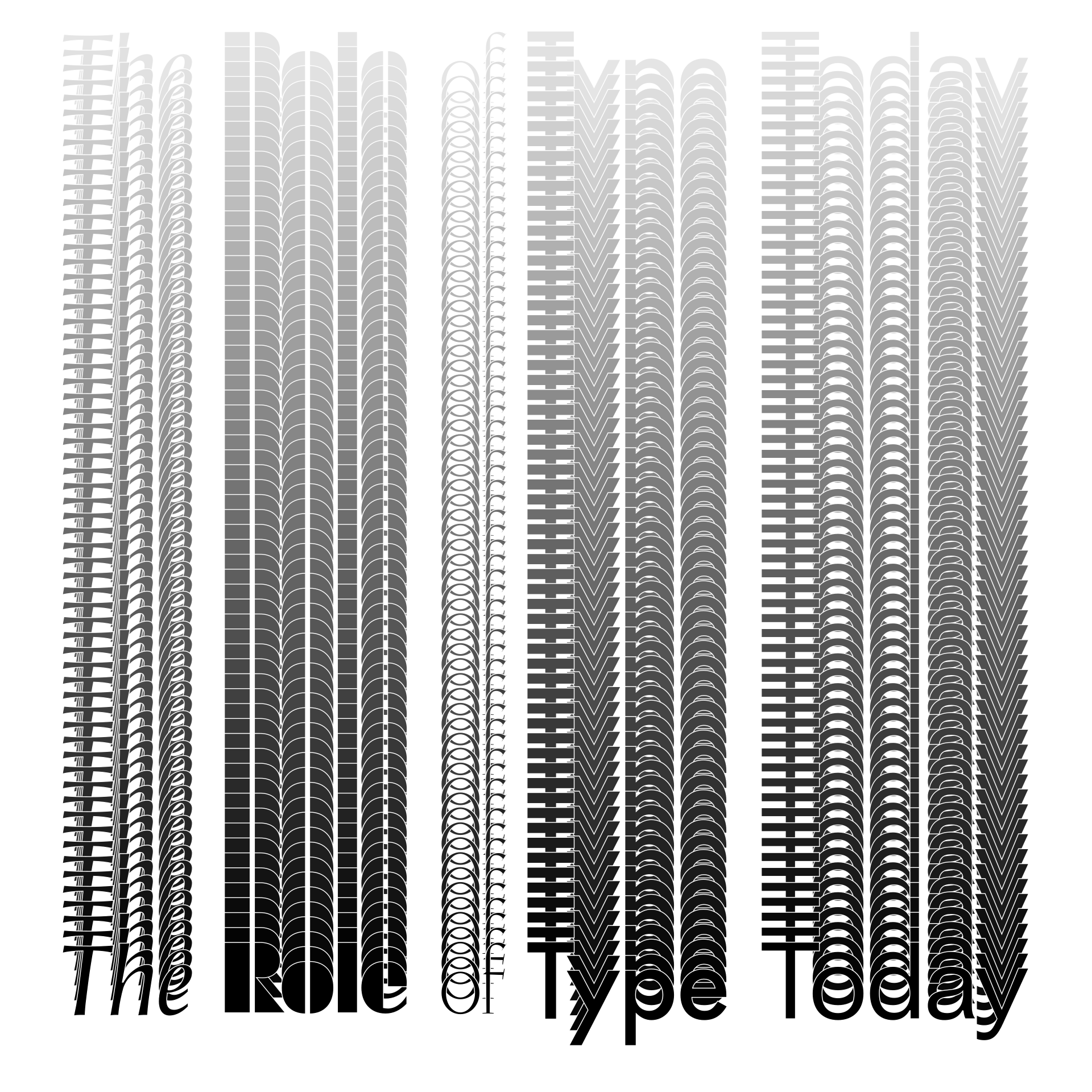
We live surrounded by text. Screens, interfaces, applications, campaigns, publications, navigation systems, motion graphics, signage, social media, products, instructions and physical spaces. Typography accompanies almost every decision we make throughout the day.
Never before have we interacted with so many communication systems at the same time. And precisely because of that, typography has stopped being a secondary element and become one of the most important tools in contemporary communication.
Brands no longer communicate in one place or in one single way. They speak constantly across platforms, devices and different contexts. Within this visual saturation, typography has evolved from a secondary detail into one of the most important tools of contemporary communication. A typeface does not only define how a brand looks. It defines how it speaks. It shapes reading rhythm, the clarity of a system, the way an identity behaves on screen or how an organization maintains consistency over time. It can make an experience feel precise, human, technical, quiet or unexpectedly approachable.
That is the true value of typography: building a recognizable and consistent voice within an environment in constant transformation.
At Bauer Types, we understand typography as a combination of culture, technology and design. Our practice is rooted in a historical legacy deeply connected to twentieth-century type design, while remaining entirely focused on the present: developing typographic tools capable of responding to the contemporary challenges faced by brands, institutions and digital platforms.
We design type for living systems. For brands that evolve, shift across contexts, expand internationally and still need to communicate clearly without losing personality. Because typography is not a visual finish. It is communication infrastructure.
Custom font or Readymade?
Not every brand necessarily needs a custom typeface. In many cases, a carefully selected and thoughtfully implemented readymade font can provide exactly the right balance of functionality, personality and efficiency. Contemporary brands operate as complex systems. They no longer exist in a single place or format, but across interfaces, campaigns, applications, motion graphics, publications, signage and physical experiences. Typography sits at the center of that structure.
But when communication systems become more complex, or when brands require a more distinctive and flexible voice, custom typography allows identities to move beyond generic visual language and build something truly their own. In a context where many identities increasingly begin to look alike, developing custom typographic systems allows brands to build something far deeper than a recognizable aesthetic: it allows them to define a voice.
Contemporary type design is no longer only about drawing characters. It is about building systems capable of adapting across technologies, platforms and behaviors without losing consistency. Every detail matters. Visual tone, legibility, screen performance, motion behavior, responsive environments or the coexistence of different languages and platforms.
At Bauer, we approach each project through a combination of research, visual sensitivity and technical precision. Some identities require rational and highly functional structures. Others need tension, expressiveness or a certain human warmth. In many cases, the goal is not to constantly attract attention, but to generate recognition in a quiet and consistent way. Today, a typeface needs to function across browsers, applications, dynamic interfaces, audiovisual campaigns and printed publications while remaining visually coherent and technically robust. Spacing, kerning, OpenType Features, screen optimization, technical compatibility or variable fonts are often invisible details, yet essential to how a contemporary type system performs.
When typography is well designed, everything feels natural. Information becomes clearer. Interfaces become easier to navigate. Communication becomes more consistent. And that sense of naturalness is often the hardest thing to design.
Understanding Before Designing
Not every project requires a new typeface. Very often, the real issue lies in how existing typography is being used. Typographic consulting allows us to analyze visual systems, detect inconsistencies and identify solutions before beginning a full design process. In some cases, small adjustments can completely transform the clarity and perception of a brand.
We work with studios, institutions and internal teams helping them define typographic criteria, optimize libraries, improve legibility, establish hierarchies or correctly implement OpenType technologies and contemporary digital systems. Typography is present across almost every touchpoint within an organization, yet it is rarely analyzed deeply enough. And still, typographic problems directly affect communication: confusing interfaces, inconsistent identities, systems that are difficult to maintain or reading experiences that feel inefficient.
Our approach combines technical analysis with visual direction. We seek to understand how a brand truly functions before proposing solutions. Because designing typography also means designing behaviour.
Clear, Flexible and Continuous Licensing
Typographic licensing is often perceived purely as a legal matter. For us, it is part of the system design itself. Every project has different needs: growing companies, digital platforms, international teams, editorial publications or temporary campaigns. That is why we work with licensing models that are clear, flexible and adapted to the reality of each client.
We understand licensing as a tool that allows typography to be used consistently and sustainably over time. Our goal is not to restrict the use of fonts, but to help them integrate naturally into real communication systems. Because a typeface only acquires real value when it can be used effectively.
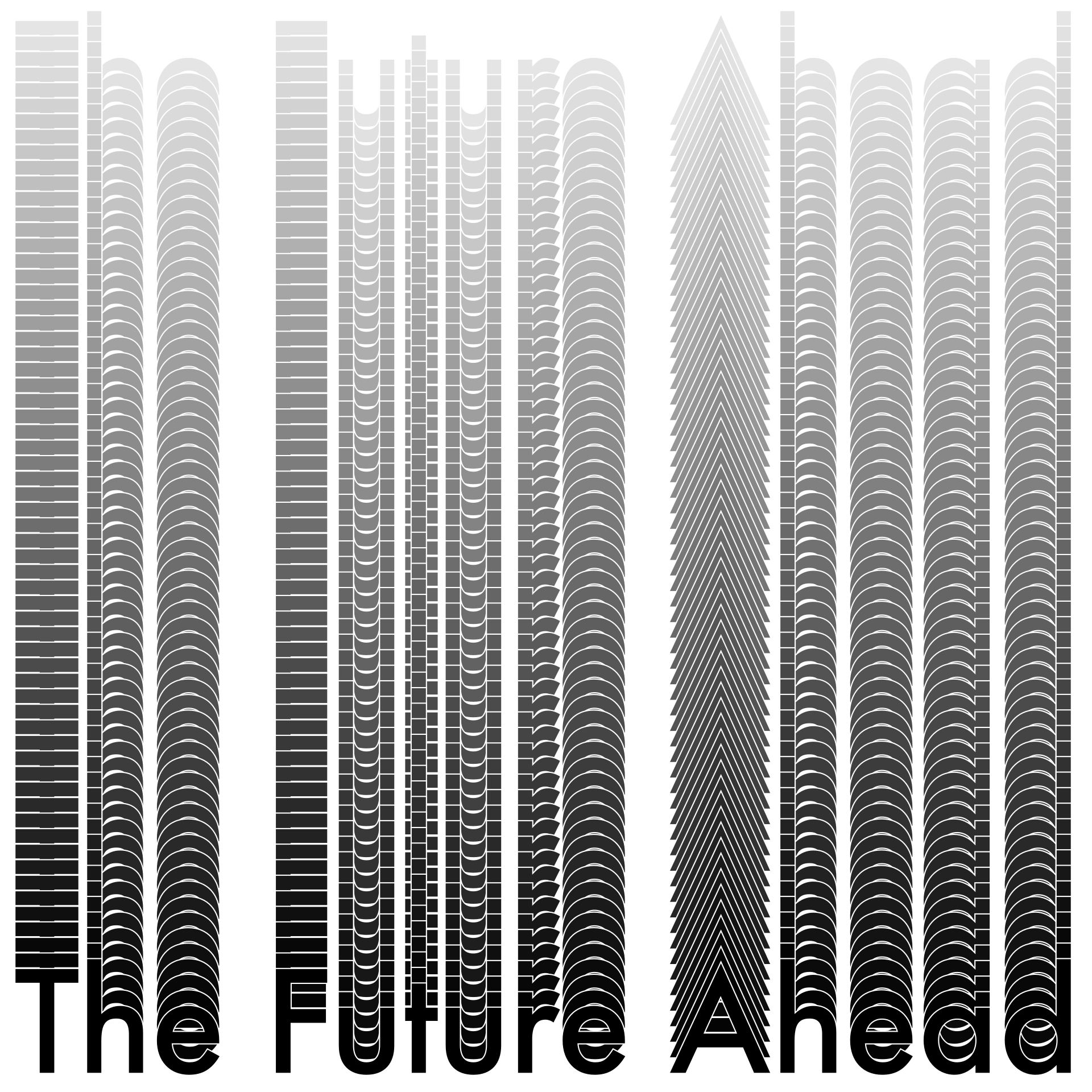
The Future Ahead
The future is uncertain, and technology will continue transforming the way brands communicate. Interfaces will evolve, systems will become more dynamic and visual environments increasingly automated. Typography, however, may remain one of the few disciplines computational models cannot fully replicate without the human eye. Subtle decisions, optical adjustments and visual sensitivity still require human perception and human judgment.
More importantly, typography is not shaped by technology alone. It is shaped by language, culture and human behaviour, and by how people read, interpret, trust and emotionally connect with information across different contexts. That is why type design continues to matter. Not simply as a visual tool, but as a way of creating clarity, recognition and continuity within constantly changing environments.
At Bauer Types, we design typographic systems intended to evolve over time, adaptable enough for contemporary platforms, yet durable enough to remain meaningful beyond them. From metal type to digital systems, typography has continuously adapted to technological change. Artificial intelligence will become part of that evolution too. But beyond every technological shift, communication still depends on something fundamentally human: how we read, interpret and connect with one another.


