Fidelio
BUYLEAD VERSION
- Designer
- José Mendoza y Almeida
- Foundry
- Neufville
- Year
- 1980
DIGITAL VERSION
- Publisher
- Bauer Types
- Digitalisation
- Neufville Digital
- Year
- 2015
DESCRIPTION
Fidelio is a chancery italic display typeface inspired by expressive handwritten calligraphy. Its flowing strokes, broad-nib construction, and dynamic rhythm give it a lively and elegant tone. The design includes swash capitals, ligatures, and decorative alternates, making it particularly suitable for headlines, invitations, editorial design, and expressive typographic compositions where a calligraphic voice adds personality and warmth.
Symphony
Fidelio was named after Beethoven's only opera.
A chancery italic typeface with many
options to choose from.
Fidelio in use
over Beethoven with the manuscript of the Missa solemnis,
by Joseph Karl Stieler's, 1820.
PREVIEW
- Fidelio writes with rhythm, movement, and grace.
- Fidelio gives you almost infinite combinations.
TYPE TESTER
GLYPH SET
Languages
- Afrikaans
- Albanian
- Asu
- Basque
- Bemba
- Bena
- Bosnian
- Catalan
- Cebuano
- Chiga
- Colognian
- Cornish
- Corsican
- Croatian
- Czech
- Danish
- Embu
- English
- Esperanto
- Estonian
- Faroese
- Filipino
- Finnish
- French
- Friulian
- Galician
- Ganda
- German
- Gusii
- Haitian Creole
- Hungarian
- Icelandic
- Ido
- Inari Sami
- Indonesian
- Interlingua
- Irish
- Iskonawa
- Italian
- Javanese
- Jju
- Jola-Fonyi
- Kabuverdianu
- Kalaallisut
- Kalenjin
- Kamba
- Kikuyu
- Kinyarwanda
- Latvian
- Lithuanian
- Lojban
- Lower Sorbian
- Luo
- Luxembourgish
- Luyia
- Machame
- Makhuwa-Meetto
- Makonde
- Malagasy
- Malay
- Maltese
- Manx
- Māori
- Meru
- Morisyen
- North Ndebele
- North Sámi
- Northern Sotho
- Norwegian Bokmål
- Norwegian Nynorsk
- Nyankole
- Occitan
- Oromo
- Pite Sámi
- Polish
- Portuguese
- Romansh
- Rombo
- Rundi
- Rwa
- Samburu
- Sango
- Sangu
- Sardinian
- Scottish Gaelic
- Sena
- Serbian
- Shambala
- Shipibo-Konibo
- Shona
- Slovak
- Slovenian
- Soga
- Somali
- South Ndebele
- Southern Sotho
- Spanish
- Sundanese
- Swahili
- Swati
- Swedish
- Swiss German
- Taita
- Taroko
- Teso
- Tsonga
- Tswana
- Turkish
- Turkmen
- Ume Sámi
- Upper Sorbian
- Vunjo
- Walloon
- Wolastoqey
- Wolof
- Xhosa
- Zulu
Context
Fidelio was conceived as a contemporary interpretation of classical chancery and italic calligraphy, drawing on the traditions of formal handwriting used in literary, ceremonial, and editorial contexts. Its structure reflects the movement of the hand and the logic of the pen, prioritizing rhythm, contrast, and fluidity over rigid typographic construction.
Historically, typefaces of this nature have been used to convey elegance, refinement, and expressiveness, often appearing in cultural publications, book covers, and printed matter where tone and atmosphere are as important as readability. Fidelio continues this tradition, translating calligraphic sensitivity into a typographic form suitable for modern composition.
Biography
José Mendoza y Almeida was born in Sèvres, near Paris, in 1926. A graphic designer, calligrapher, and type designer, he became one of the most distinctive French typographic voices of the second half of the 20th century.
During the 1950s, he worked closely with Maximilien Vox and, between 1954 and 1959, served as assistant to Roger Excoffon at the Fonderie Olive in Marseille, an experience that deeply influenced his understanding of expressive typography and lettering.
Throughout his career, Mendoza y Almeida collaborated with major type institutions and companies including Lettergieterij Amsterdam, Monotype Corporation, and International Typeface Corporation. He designed several notable typefaces, including Mendoza, Photina, Pascal, Fidelio, and Sully Jonqueres.
From 1985 to 1990, he served as professor of typography at the Imprimerie Nationale in Paris, where he transmitted his knowledge of typography, calligraphy, and letterform construction to a new generation of designers. He died in Sèvres, France, in 2018.
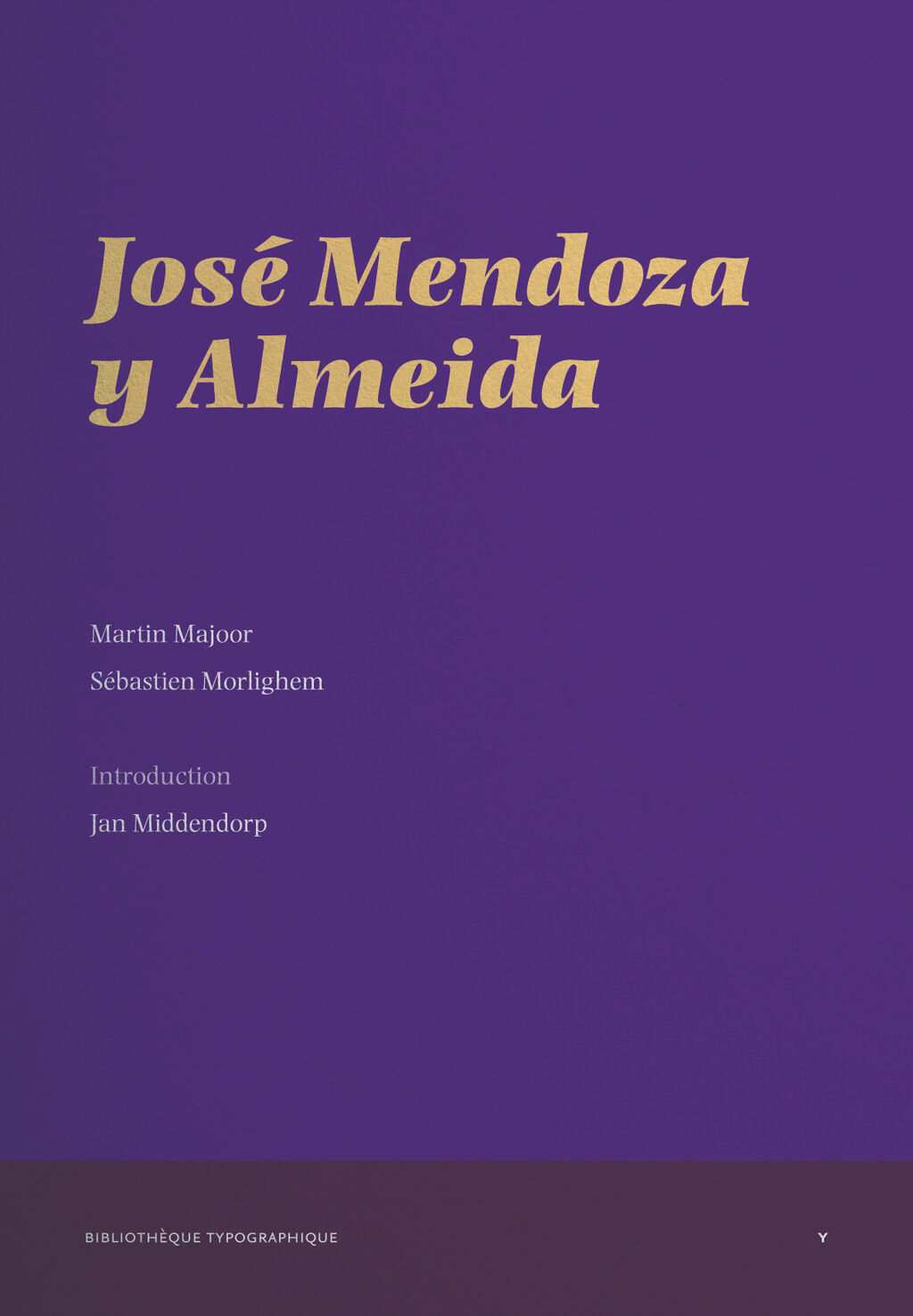
cTo know more about Jose Mendoza y Almeida, we recommend this interesting book.
BUYING OPTIONS
1. PICK UP YOUR FONT
2. CHOOSE LICENSE & USAGE
LOOKING FOR SOMETHING ELSE?
We can offer you custom tailored licenses according to your needs - broadcasting, corporate, server, gaming.
CONTACT US

